
Three kinds of board sold as composite
Stores put all of these on the same shelf. They are built differently, and the difference shows up in weight, heat and price.
- Capped composite: wood fiber and plastic in the core, a plastic shell over itTrex, most TimberTech lines, Fiberon Concordia, Sanctuary and Good Life, Eva-Last Infinity. The shell is what keeps water, stains and sun out of the core. Old uncapped boards were the ones that went moldy and faded, and they are the reason composite once had a bad name.
- PVC: no wood fiber at allTimberTech Advanced PVC (sold for years as AZEK), Fiberon Promenade and Paramount, and Eva-Last Apex Plus and Pioneer, which are bamboo-reinforced PVC. Lighter than composite and indifferent to water. Usually the most expensive tier.
- Mineral-based composite: minerals in the core instead of wood fiberDeckorators Voyage and Summit. Deckorators says the mineral core keeps the board more stable through temperature swings, which matters on long straight runs.
- Redwood, for comparison: real woodCheaper to build, and nothing else looks quite like it. It asks for sanding and stain on a schedule. Skip that and it turns grey.
Composite deck cost next to wood
Per square foot, built, for a new deck on level ground. Straight from our calculator.
Replacing an old deck adds about $5 per sq ft for demolition and haul-away. Elevated decks run about 12% more, hillside decks about 22%, multi-level about 15%.
Price my deckThe boards we install, and what the manufacturer warrants
These are the lines that show up in our estimates. The warranty terms are the manufacturers', taken from their own documents. We add our own three-year warranty on the workmanship.
- Eva-Last Apex Plus Bamboo-PVC
- 50-year limited residential material warranty
- Eva-Last Pioneer Bamboo-PVC
- 50-year limited residential material warranty
- Eva-Last Infinity Capped composite
- 30-year limited residential material warranty
- TimberTech Advanced PVC Vintage and Landmark PVC
- Limited lifetime product warranty, 50-year fade and stain
- TimberTech Terrain Capped composite
- 30-year product, 30-year fade and stain
- TimberTech Prime+ Capped composite
- 25-year product, 25-year fade and stain
- Trex Transcend, Lineage and Signature Capped composite
- 50-year limited residential, 50-year fade and stain
- Deckorators Voyage Mineral-based composite
- 50-year structural, 25-year stain and fade, 25-year removal and replacement
- Deckorators Summit Mineral-based composite
- 25-year structural, 25-year stain and fade
- Fiberon Promenade and Paramount PVC
- Lifetime physical integrity, 50-year stain and fade
- Fiberon Concordia (Symmetry and Horizon) Capped composite
- Lifetime physical integrity, 50-year stain and fade
- Fiberon Sanctuary Capped composite
- 40-year physical integrity, 40-year stain and fade
- Fiberon Good Life Escapes Capped composite
- 30-year physical integrity, 30-year stain and fade
- Fiberon Good Life Weekender Capped composite
- 25-year physical integrity, 25-year stain and fade
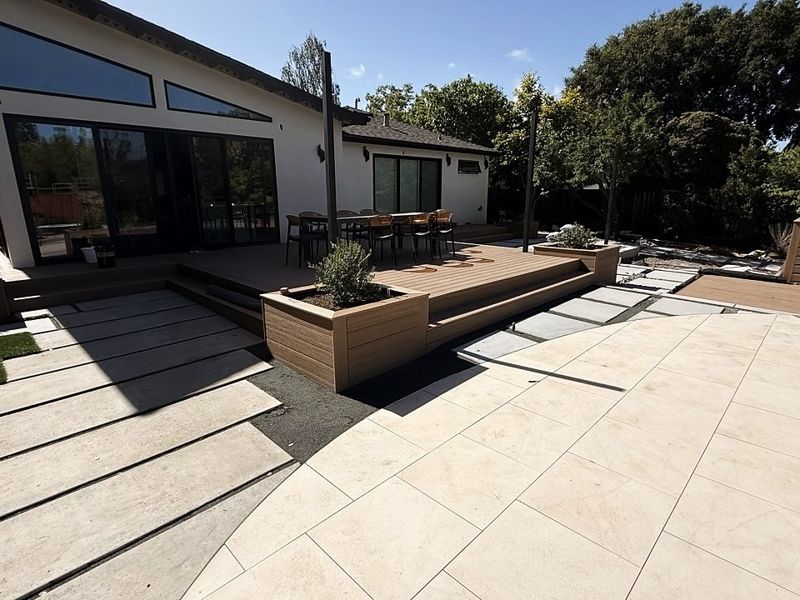
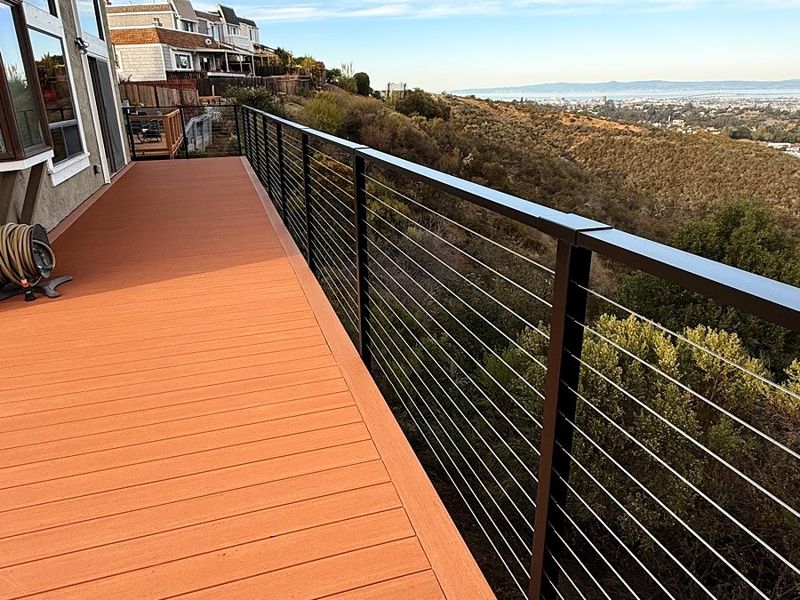
Composite and PVC decks we built
See all projects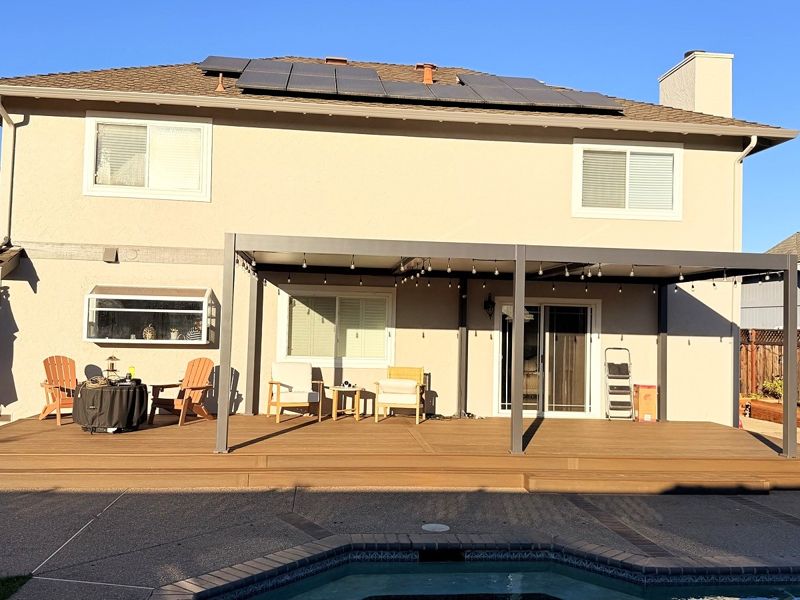
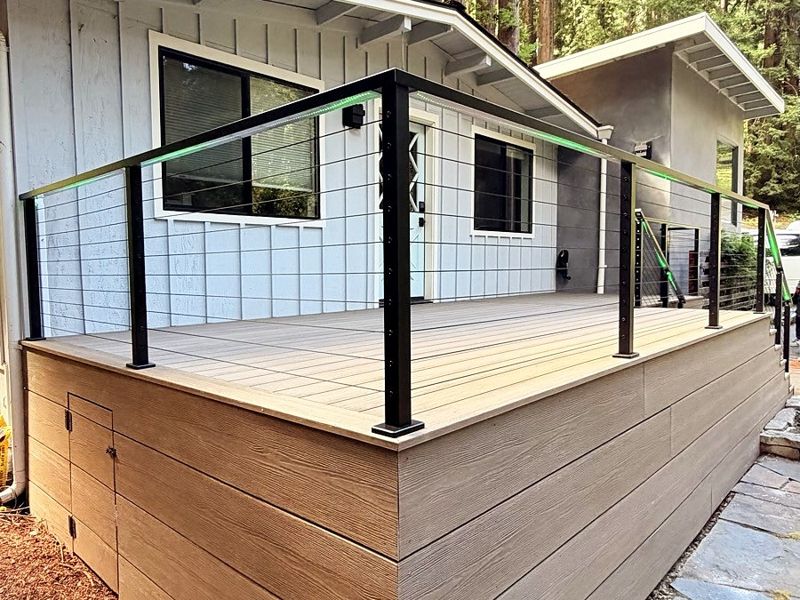
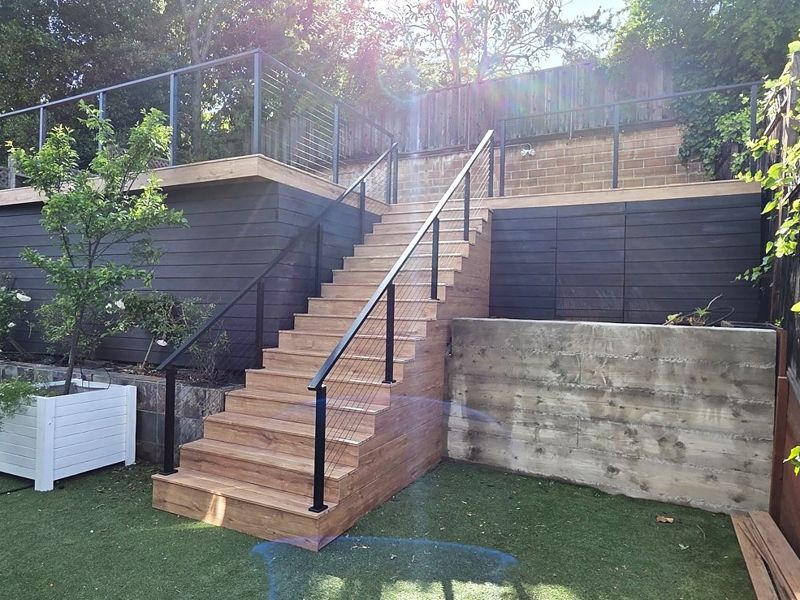
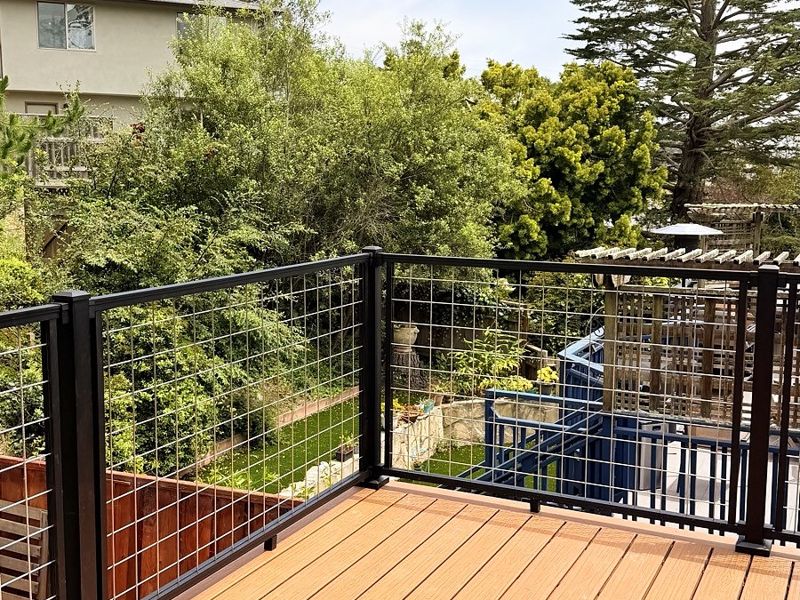
Where composite decks go wrong
Each of these is written into the manufacturer's install guide, and the board warranty is written against that guide.
- Joist spacing for composite decking: 16 inches, 12 on a diagonalTrex puts joists at 16 inches on center for a normal layout and 12 inches when the boards run diagonally. A frame laid out for 2-inch wood decking at 24 inches will feel springy under composite boards.
- Gaps set by temperature, not by eyeComposite grows in heat and shrinks in cold. Trex asks for 1/4 inch between boards and 1/8 inch at the ends when the boards go down above 40°F. Too tight and the deck buckles in August. Too loose and the ends open up in January.
- The brand's own clips and screwsEach system is tested with its own hidden fasteners, and the manufacturer's install guide is what the warranty is written against. Mixing brands is the easy way to lose that.
- A border that is framed forA picture-frame border looks finished, but it needs extra blocking under it. It has to be planned in the framing, not added at the end.
Our take on the brands
- Eva-Last: stiffer boards, the most natural grainEva-Last reinforces Apex Plus and Pioneer with glass fiber inside the board, and Infinity IS uses an I-beam profile. Underfoot that reads as a stiffer board than most. To our eye its grain is also the closest to real wood of any brand we install.
- Less slippery in fog and drizzleCoastal and Peninsula mornings keep a deck damp for hours. In our experience Eva-Last and Deckorators Summit and Voyage keep their grip better in that weather than the other brands we install.
Composite decking colors: our advice
- Light boards over cool-touch linesHeat-reducing lines cost more. In our experience a light color gets you most of the way: it heats up less in the sun, and it costs less.
- Light colors fade less visiblyEvery manufacturer promises a long fade warranty, and over enough years every board still fades a little. On a light board you hardly see it. On a dark one you do.
- Light boards hide dustDust and pollen show far less on a light deck, so it needs washing less often.
- Look first, heat secondIf you walk the deck in sandals, board temperature hardly matters. Most people go barefoot on it now and then, and look at it every day, so we would choose the color you like to look at.
If your house is in a fire zone
In a mapped fire hazard zone the building department asks for decking that the California State Fire Marshal has listed for wildland-urban interface (WUI) use. Check the listing before you order, not after.
- TimberTech is the strongest hereTimberTech lists its Advanced PVC Vintage, Landmark and Harvest+ collections with a Class A flame spread rating and as WUI compliant, and Harvest, Reserve and Premier as WUI compliant. That fire rating is part of why those lines cost more. Prime+ is not on that list.
- Fiberon PVCFiberon rates Promenade and Paramount Class A. For a fire-zone deck, confirm the exact line in Fiberon's fire-rated decking guide.
- Eva-Last Apex is on the state listEva-Last's Apex boards are on the State Fire Marshal's list of decking approved for fire zones (listing 8110-2314:0500), installed with the Hulk hidden fastener system as the listing describes. Eva-Last plans the same for Pioneer and possibly Infinity.
What deck owners run into
We read what owners write on deck forums after a few years with their boards. These came up more than once.
- The line matters more than the brandEvery big brand sells an entry line and a top line. Scratch and dent complaints cluster on the cheaper lines, whatever the logo.
- Grills leave marksHot oil, ash or a dropped grill tool can melt a spot into the surface. Put a heat mat under the grill.
- Windows can burn a deckSunlight reflected off low-E windows can discolor or warp composite and PVC near the house. TimberTech and Eva-Last both exclude that damage from their warranties, so a board under a south-facing window is worth a second look.
- Wet boards get slickOwners of capped composite and PVC mention slipping after rain. Mineral-based boards come up again and again as the grippier choice.
- Online prices run lowThe number that surprises people is not the boards. Framing, fascia, stairs and taking out the old deck are where a quote grows.
Questions people actually ask
Does composite decking get hot?
Yes, in direct sun, and dark colors get hotter than light ones. Trex says its SunComfortable boards cut heat buildup by up to 35°F against its original boards in a lab test, and it also says plainly that they will still get hot on a hot day. Our own view: the cool-touch lines cost more than they give back. A light color does most of that work for less money.
Is PVC better than composite?
It is lighter and shrugs off water completely, and it usually costs more. TimberTech AZEK is the familiar example: it is PVC, while most TimberTech lines are composite. For a deck by a pool or in a damp, shaded yard, PVC earns its price. For an ordinary sunny backyard, a good capped composite does the job.
Trex or TimberTech?
Both are large, established brands, and both have lines at every price. Compare the specific line rather than the brand: Trex Transcend against TimberTech Terrain, for example, and look at the warranty each line carries.
Can you paint or stain composite decking?
No. Trex, for one, says paint or stain may void its fade and stain warranty. Composite is cleaned, not refinished. If it looks tired, washing is the fix.
How do you clean composite decking?
Soap, water and a soft brush. Trex allows a pressure washer on its current lines, up to 3100 psi with a fan tip held at least 8 inches from the board. Check your brand's care guide first; older boards should not be pressure washed at all.
How long does a composite deck last?
The boards carry warranties from 25 years to a lifetime, depending on the line. The frame underneath is usually pressure-treated lumber, and on an old deck that frame is often the part that decides whether new boards can go on it.
What does a composite deck cost in the Bay Area?
Our calculator puts a ground-level composite deck at $50 to $75 per square foot, built. Hillside and elevated decks cost more because of the footings and framing.
Before you call
Three steps from here
See your price
Size, material and ground: the calculator gives you a range in about a minute.
See what we built
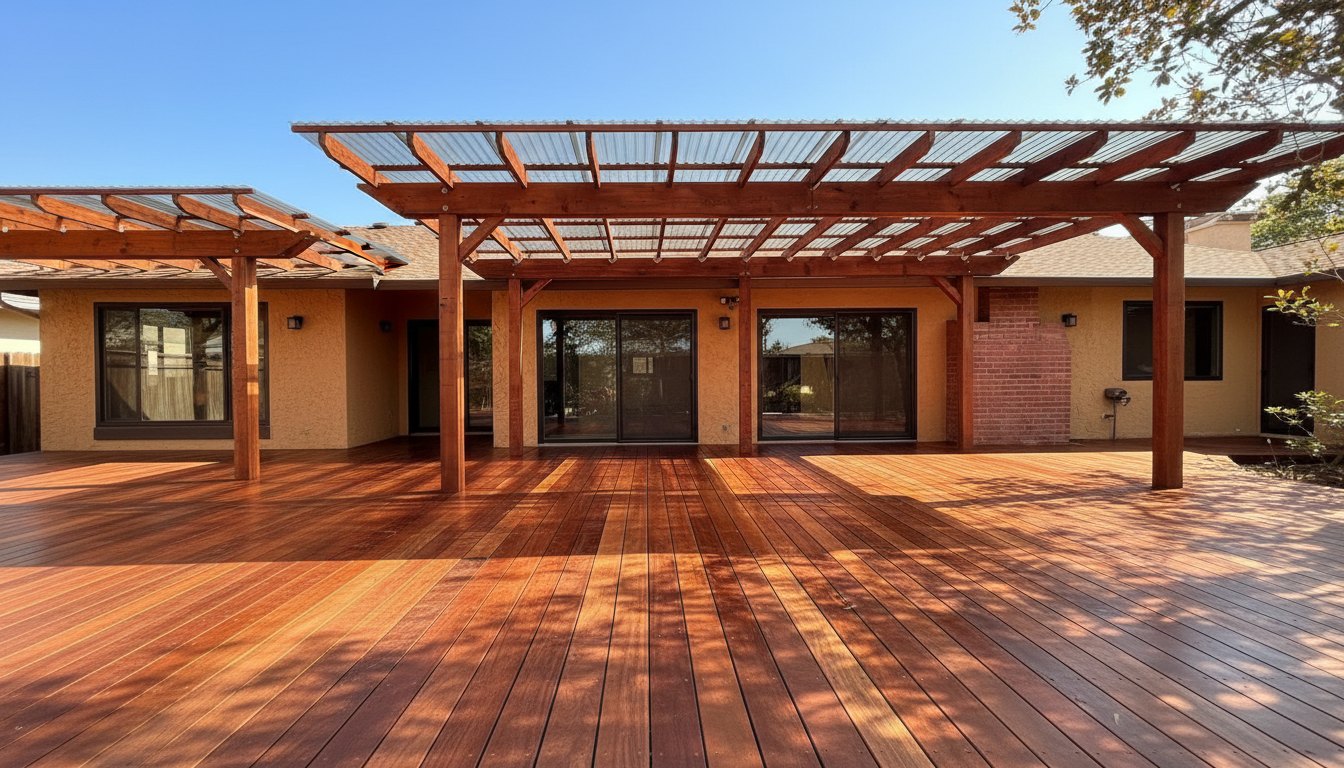
Decks, stairs and pergolas across the Peninsula, South Bay and Santa Cruz County.
Browse projectsWant a number for your own deck?
Tell us the size and the ground, and the calculator gives you a range. The line and the color are chosen with you at the estimate visit.